Source High Capacity Grain Destoner for Wheat, Corn, and Rice
Find a high capacity grain destoner for wheat, corn, and other cereal grains. Compare 30 models with capacities up to 10t/H, featuring ISO9001 standards and customizable options for efficient stone removal in flour and seed processing; compare the available evidence and request quotations based on your requirements.
Key considerations
Products List


$3200.00 - $6900.00
Moq: 1


$3200.00 - $6900.00
Moq: 1

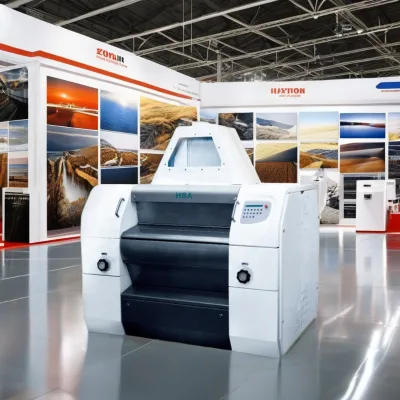


$4000.00 - $4300.00
Moq: 1


Comprehensive Sourcing Guide
High Capacity Grain Destoner for Wheat and Corn Sourcing Guide
Procuring a high capacity grain destoner for wheat and corn requires balancing throughput, cleaning precision, and long-term mechanical reliability. Destoners occupy a critical position in grain processing lines, removing stones, mud balls, and other high-density impurities before milling or storage. A poorly specified machine can allow contamination downstream or crack kernels through excessive aspiration and sieve vibration, so buyers should treat specification review as a technical exercise rather than a simple price comparison.
This guide organizes the sourcing decision into seven areas: understanding what listings actually signal, verifying technical specifications, reviewing compliance documentation, evaluating cost drivers, qualifying suppliers, and planning long-term procurement checks. Throughout, buyers should rely on the attributes observed in product listings—models such as 5XQS-10, 5XZC-3DH, and 5XQS-2500M, capacities from 5 to 10 t/h, and power ratings near 9.7 kW—as starting points for inquiry, confirming each claim directly with suppliers before committing to an order.
Product Scope and Observed Listing Signals
Listings for destoners in this category consistently target cereal grain applications, with keywords explicitly covering wheat and corn destoning. Observed models include the 5XQS-10 rated at 10 t/h with 9.7 kW power, the 5XZC-3DH, the 5XZS-10CDS, and larger gravity-separator style units such as the 5XQS-2500M and 5XQS-1500M. Stated capacities range from 5 t/h—based on soybean—to 5–10 t/h, so buyers should clarify which grain basis a capacity figure uses, since wheat, corn, and sesame flow differently.
Applications listed extend beyond wheat and corn to flour, rice flour, beans, and general grain cleaning, indicating that many machines serve multi-commodity lines. Buyers should map their own material profile—grain type, moisture, and contaminant load—against these stated applications, and ask how a machine configured for wheat performs when switched to corn. Where a listing cites cleaning clarity of 99% and a broken rate of 0.2%, treat these as vendor observations to be validated through sample testing with your own grain rather than accepted at face value.
Technical Specifications to Verify
Capacity and power are the first specifications to pin down. The observed 10 t/h at 9.7 kW and 5 t/h at 6.6 kW give reference points, but buyers should request capacity figures specific to wheat and corn at their expected moisture content. Also verify voltage compatibility—listings show 380V—against your facility supply, and confirm total installed load including fans and vibratory drives. Sieve area matters as well; one listing states 5 square meters of sieve area with dimensions of 2550×2000×1600 mm, which affects both throughput and floor space planning.
Configuration details deserve equal attention. Listings describe both vertical and horizontal appearances, single gravity tables, two-layer designs, and inclined hoist bucket elevators, so buyers should decide which layout suits their intake system. Machine weight figures vary widely in the listings—from 790 kg up to 20,000 kg—so confirm shipping weight for freight costing and installed weight for foundation design. Finally, request dimensioned drawings, as listed envelope sizes such as 180×220×290 cm or 180×163×160 cm determine installation clearances and maintenance access.
Compliance and Safety Documentation
Certification signals in these listings include ISO 9001, ISO9001:2008, TUV, SGS, and SONCAP. Buyers should not assume that a standard named in a listing applies to the specific unit being quoted; instead, request the actual certificate, verify its scope and validity, and confirm it covers the manufacturing facility producing your machine. For destinations with mandatory pre-shipment inspection regimes such as SONCAP for certain markets, clarify early which party arranges the certification and who bears the cost.
Electrical and mechanical safety documentation is equally important for a machine combining vibration, aspiration, and powered elevators. Ask for wiring diagrams, control schematics, guard and emergency-stop descriptions, and any operator manuals supplied in your required language. Because destoners generate dust, buyers should also request details on aspiration connections and dust extraction interfaces so the unit can be integrated with plant-level dust control. Keep all documentation requirements in the purchase contract rather than relying on verbal assurances from the sales team.
Cost Drivers and Commercial Terms
Observed listing prices span a very wide range—from roughly $1,500 to over $200,000—reflecting differences in machine type, capacity, and configuration across the category rather than a single product's market value. Buyers should therefore build their own cost model from specifications: gravity table area, number of layers, elevator inclusion, material of contact parts, and degree of customization. A larger model such as the 5XQS-2500M will sit far above a compact 5XZC-3DH, so compare machines within the same capacity class only.
Customization is listed as available, and color is offered as white, blue, or per buyer requirements, which suggests suppliers will tailor machines but may adjust price and lead time accordingly. Confirm what is included in the quoted price: spare sieve decks, rubber balls or screens, tooling, and commissioning support. Packing is listed as wooden crates, containers, or nude packing—match the packing method to your sea freight route and confirm whether crating costs are included. Also agree on Incoterms, payment structure, and warranty duration in writing before placing the order.
Supplier Qualification and Quality Control
Because destoners are precision vibratory machines, supplier capability in balancing, screen fabrication, and fan assembly directly affects performance. Evaluate prospective suppliers by requesting factory information, production photos or video audits, and references from buyers processing wheat or corn at similar scale. Listings showing origins in Hebei and Shijiazhuang City indicate a concentrated manufacturing base, but buyers should still verify the actual production site rather than relying on a trading office's description.
Quality control should be verified through a pre-shipment inspection on your behalf, using your own grain samples where possible. Define acceptance criteria in the contract: cleaning clarity consistent with the 99% figures cited in listings, broken kernel rates at or below the 0.2% levels stated, vibration stability, and noise limits. Require a witnessed run test—ideally via video or third-party inspector—covering startup, sustained operation at rated capacity, and shutdown. Retain the right to reject or require remediation if the tested machine fails the agreed criteria, and document results before final payment release.
Long-Term Procurement Checks
The destoner is a long-service asset, so plan for consumables and support from the outset. Sieve decks, ball trays, bearings, and elevator belts wear with use; ask suppliers for a recommended spare parts list, pricing, and expected replacement intervals at your throughput. Confirm that spare parts can be ordered independently of a full machine purchase and that part drawings or part numbers are supplied with documentation, reducing dependency on a single channel for routine maintenance.
Over time, track performance indicators—cleaning clarity, broken rate, and actual throughput against the 5–10 t/h ratings—to detect screen wear, fan degradation, or vibration drift early. Schedule periodic inspections of the gravity table surface and suspension components, and train operators on deck angle and airflow adjustment for each grain type. Finally, reassess the supplier relationship annually: consistent spare parts availability, responsive technical support, and willingness to support capacity upgrades matter as much as the original purchase price in determining total cost of ownership.
FAQs
What is the capacity of the high capacity grain destoner for wheat and corn?
The high capacity grain destoner for wheat and corn offers a capacity of 10 tons per hour. Some models provide a range of 5 to 10 tons per hour based on the specific grain type being processed. This ensures efficient handling for large-scale cereal grain operations.
Which certifications do the destoner machines hold?
These destoner machines hold ISO 9001:2008, TUV, SGS, and SONCAP certifications. Specific models may also carry TUV Co certificates. These standards verify the quality and safety of the equipment for international grain processing applications.
Can the destoner be customized for specific grain types?
Yes, the destoner is available for customization to meet specific grain processing needs. It is designed to handle wheat, corn, rice flour, beans, and sesame. Customization options include color and specific operational requirements for different agricultural materials.
How is the high capacity grain destoner for wheat and corn packed?
The machine is packed in wooden crates or containers for safe transport. Some models use standard packing or nude packing with wooden boxes. This robust packaging ensures the equipment arrives in new condition without damage during shipping.
What is the power consumption of the destoner machine?
The destoner machine typically consumes 9.7 kilowatts of power. Other models may operate at 6.6 kilowatts depending on the specific configuration. The voltage requirement is generally 380V for standard industrial operation.
Where are these destoner machines manufactured?
These destoner machines are manufactured in China, specifically in Hebei and Shijiazhuang City. The origin is clearly stated as China for all listed models. This location supports the production of high-quality grain processing equipment.
What is the cleaning clarity of the destoner?
The destoner achieves a cleaning clarity of 99 percent for grain processing. It maintains a low broken rate of 0.2 percent during operation. This ensures high-quality output for cereal grains like wheat and corn.